| táⁿ-waⁿ-á-ha |
tʰóⁿwoⁿáha |
|
|
6/7/10 |
12/22/10, 5:33 PM |
Catherine Rudin |
http://omahalanguage.unl.edu/dictionary_images/taN/opd.03.047.02c.jpg |
View |
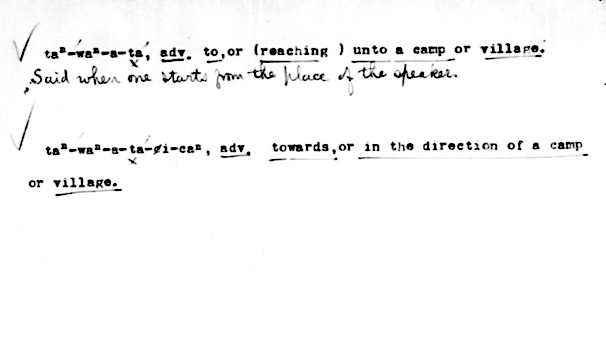
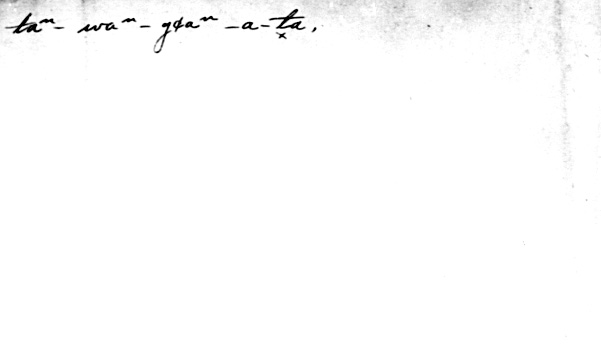
| táⁿ-waⁿ-a-ṭá |
tóⁿwoⁿatá |
p. phrase |
To (or reaching) unto a camp or village: said when one starts from the place of the speaker. |
6/7/10 |
11/28/12, 11:12 PM |
Catherine Rudin |
http://omahalanguage.unl.edu/dictionary_images/taN/opd.03.047.03b.jpg http://omahalanguage.unl.edu/dictionary_images/taN/opd.03.047.03c.jpg |
View |
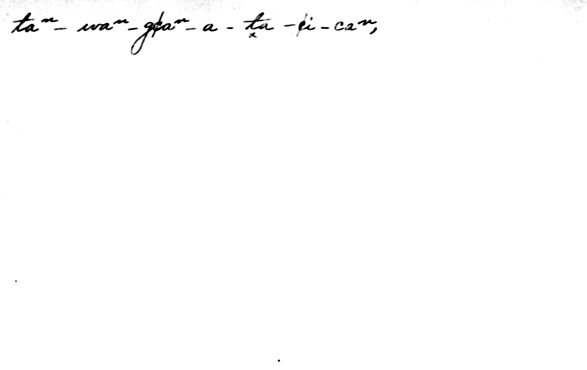
| táⁿ-waⁿ-a-ṭá-ȼi-caⁿ |
tʰóⁿwoⁿatáthishoⁿ |
|
Towards, or in the direction or a camp or village. |
6/7/10 |
12/22/10, 5:33 PM |
Catherine Rudin |
http://omahalanguage.unl.edu/dictionary_images/taN/opd.03.047.03b.jpg http://omahalanguage.unl.edu/dictionary_images/taN/opd.03.047.03d.jpg |
View |
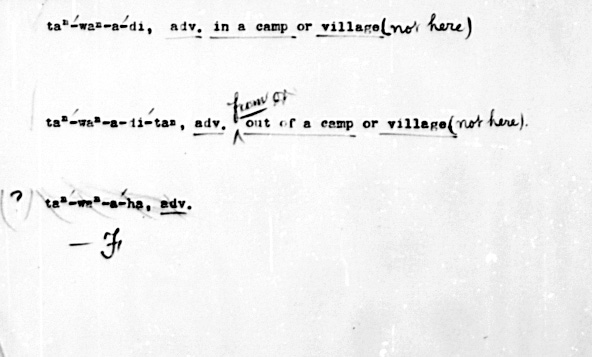
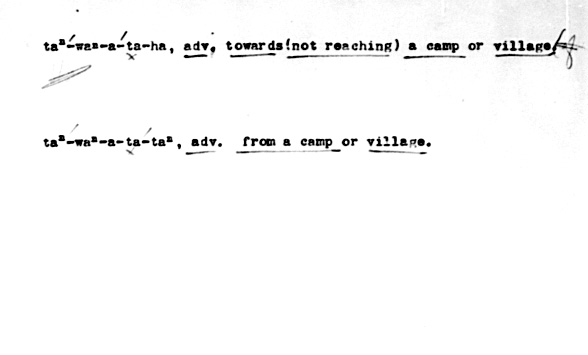
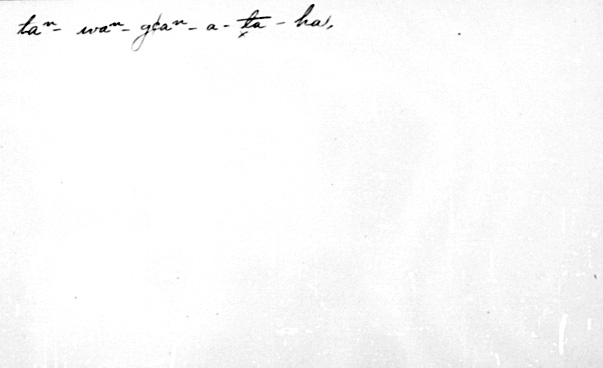
| táⁿ-waⁿ-á-ṭa-ha |
tʰóⁿwoⁿátaha |
|
Towards (not reaching) a camp or village. |
6/7/10 |
12/22/10, 5:33 PM |
Catherine Rudin |
http://omahalanguage.unl.edu/dictionary_images/taN/opd.03.047.04a.jpg http://omahalanguage.unl.edu/dictionary_images/taN/opd.03.047.04b.jpg |
View |
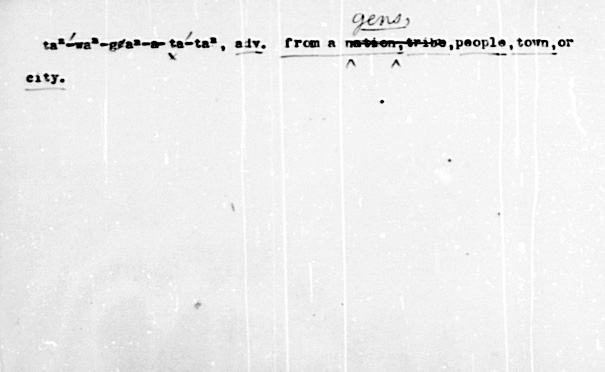
| táⁿ-waⁿ-a-ṭá-taⁿ |
tóⁿwoⁿatátʰoⁿ |
p. phrase |
From a camp or village. |
6/7/10 |
7/5/12, 8:53 PM |
Mark Awakuni-Swetland |
http://omahalanguage.unl.edu/dictionary_images/taN/opd.03.047.04a.jpg http://omahalanguage.unl.edu/dictionary_images/taN/opd.03.047.04c.jpg |
View |
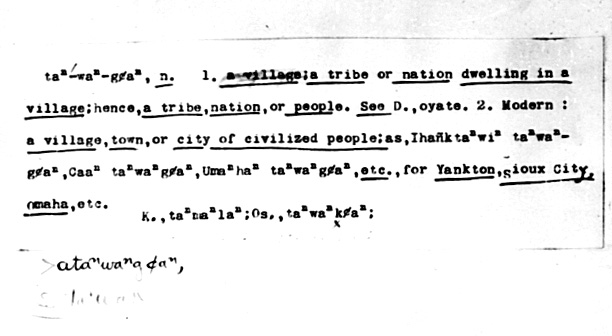
| táⁿ-waⁿ-gȼaⁿ |
tóⁿwoⁿgthoⁿ |
n. |
1. A tribe or nation dwelling in a village; hence, a tribe, nation, or people. 2. Modern: a village, town, or city of civilized people. |
6/7/10 |
7/5/12, 8:55 PM |
Mark Awakuni-Swetland |
http://omahalanguage.unl.edu/dictionary_images/taN/opd.03.047.05a.jpg http://omahalanguage.unl.edu/dictionary_images/taN/opd.03.047.05b.jpg |
View |
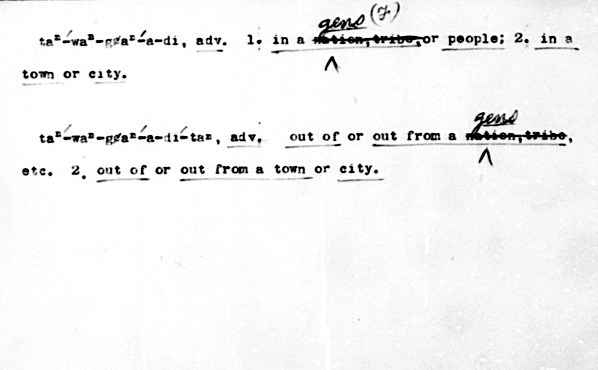
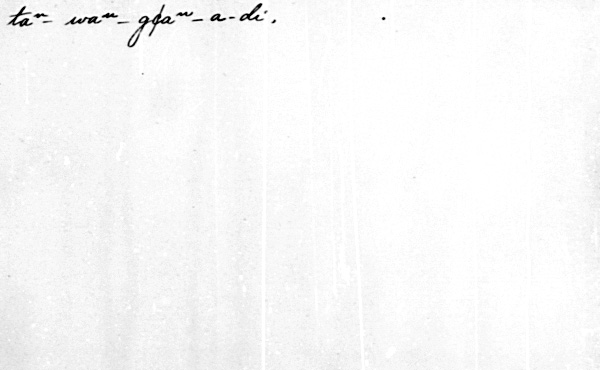
| táⁿ-waⁿ-gȼáⁿ-a-di |
tóⁿwoⁿgthóⁿadi |
p. phrase |
1. In a gens or people. 2. In a town or city. |
6/7/10 |
11/28/12, 11:13 PM |
Catherine Rudin |
http://omahalanguage.unl.edu/dictionary_images/taN/opd.03.047.05c.jpg http://omahalanguage.unl.edu/dictionary_images/taN/opd.03.047.05d.jpg |
View |
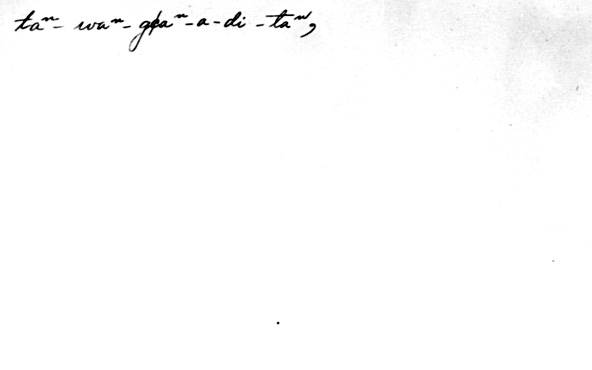
| táⁿ-waⁿ-gȼáⁿ-a-dí-taⁿ |
tóⁿwoⁿgthóⁿadítʰoⁿ |
p. phrase |
Out of or out from a gens, etc. 2. Out of or out from a town or city. |
6/7/10 |
11/28/12, 11:16 PM |
Catherine Rudin |
http://omahalanguage.unl.edu/dictionary_images/taN/opd.03.047.05c.jpg http://omahalanguage.unl.edu/dictionary_images/taN/opd.03.047.06a.jpg |
View |
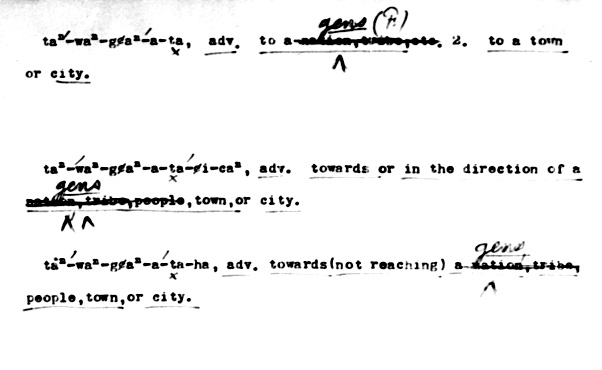
| táⁿ-waⁿ-gȼáⁿ-a-ṭa |
tóⁿwoⁿgthóⁿata |
p. phrase |
To a gens. 2. To a town or city. |
6/8/10 |
11/28/12, 11:15 PM |
Catherine Rudin |
http://omahalanguage.unl.edu/dictionary_images/taN/opd.03.047.06b.jpg http://omahalanguage.unl.edu/dictionary_images/taN/opd.03.047.07a.jpg |
View |
| táⁿ-waⁿ-gȼaⁿ-a-ṭá-ȼi-caⁿ |
tʰóⁿwoⁿgthoⁿatáthishoⁿ |
|
Towards or in the direction of a gens, town, or city. |
6/8/10 |
12/22/10, 5:33 PM |
Jacob Hilton |
http://omahalanguage.unl.edu/dictionary_images/taN/opd.03.047.06b.jpg http://omahalanguage.unl.edu/dictionary_images/taN/opd.03.047.07b.jpg |
View |
| táⁿ-waⁿ-gȼaⁿ-á-ṭa-ha |
tʰóⁿwoⁿgthoⁿátaha |
|
Towards (not reaching) a gens, people, town, or city. |
6/8/10 |
12/22/10, 5:33 PM |
Jacob Hilton |
http://omahalanguage.unl.edu/dictionary_images/taN/opd.03.047.06b.jpg http://omahalanguage.unl.edu/dictionary_images/taN/opd.03.047.07c.jpg |
View |
| táⁿ-waⁿ-gȼaⁿ-a-ṭá-taⁿ |
tʰóⁿwoⁿgthoⁿatátʰoⁿ |
|
From a gens, people, town, or city. |
6/8/10 |
12/22/10, 5:33 PM |
Jacob Hilton |
http://omahalanguage.unl.edu/dictionary_images/taN/opd.03.047.07d.jpg http://omahalanguage.unl.edu/dictionary_images/taN/opd.03.047.08a.jpg |
View |
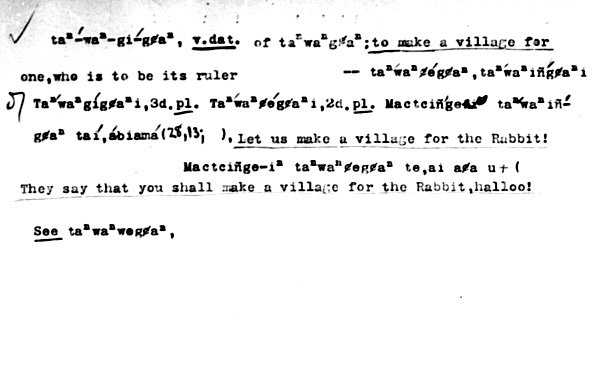
| táⁿ-waⁿ-gí-gȼaⁿ |
tʰóⁿwoⁿgígthoⁿ |
|
To make a village for one, who is to be its ruler. |
6/8/10 |
12/22/10, 5:33 PM |
Jacob Hilton |
http://omahalanguage.unl.edu/dictionary_images/taN/opd.03.047.08b.jpg http://omahalanguage.unl.edu/dictionary_images/taN/opd.03.047.08c.jpg |
View |
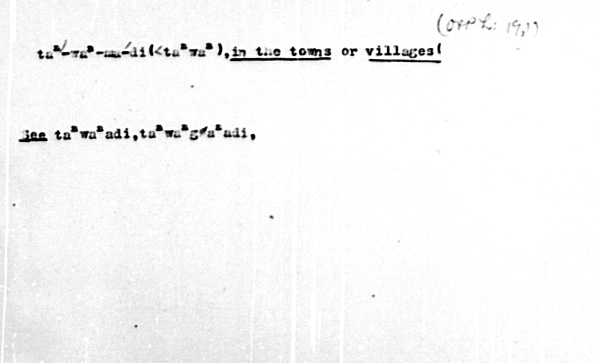
| táⁿ-waⁿ-má-di |
tʰóⁿwoⁿmádi |
|
In the towns or villages. |
6/8/10 |
12/22/10, 5:33 PM |
Jacob Hilton |
http://omahalanguage.unl.edu/dictionary_images/taN/opd.03.047.08d.jpg |
View |
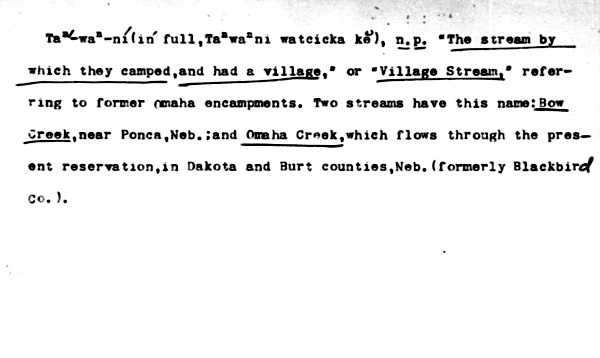
| Táⁿ-waⁿ-ní |
Tʰóⁿwoⁿní |
|
"The stream by which they camped, and had a village," or "Village Stream," referring to former Omaha encampments. |
6/8/10 |
12/22/10, 5:33 PM |
Jacob Hilton |
http://omahalanguage.unl.edu/dictionary_images/taN/opd.03.047.09a.jpg |
View |
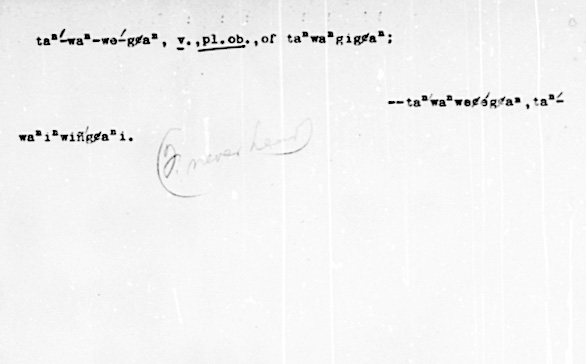
| táⁿ-waⁿ-wé-gȼaⁿ |
tʰóⁿwoⁿwégthoⁿ |
|
|
6/8/10 |
12/22/10, 5:33 PM |
Jacob Hilton |
http://omahalanguage.unl.edu/dictionary_images/taN/opd.03.047.09b.jpg http://omahalanguage.unl.edu/dictionary_images/taN/opd.03.047.09c.jpg |
View |
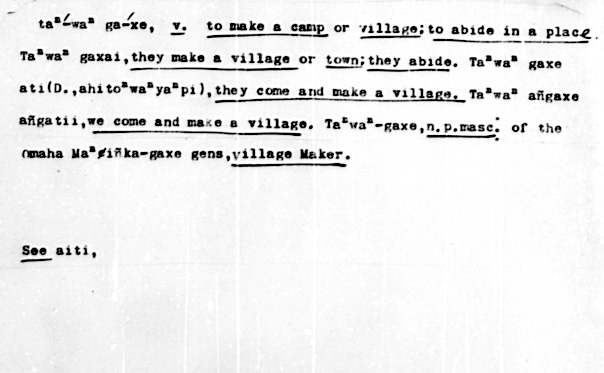
| táⁿ-waⁿ gá-xe |
tóⁿwoⁿ gáxe |
v.phrase |
To make a camp or village; to abide in a place. |
6/7/10 |
7/5/12, 8:54 PM |
Mark Awakuni-Swetland |
http://omahalanguage.unl.edu/dictionary_images/taN/opd.03.047.04d.jpg |
View |
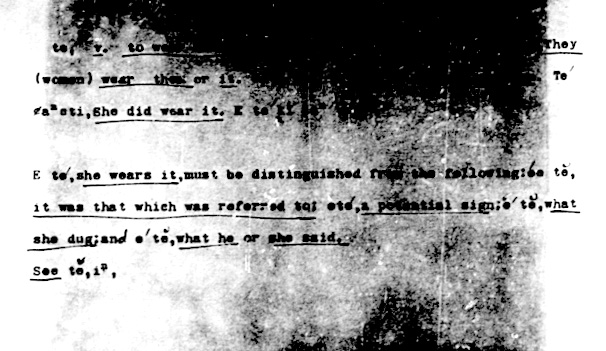
| te |
tʰe |
|
|
6/14/10 |
12/22/10, 5:33 PM |
Jacob Hilton |
http://omahalanguage.unl.edu/dictionary_images/te/opd.03.050.09a.jpg http://omahalanguage.unl.edu/dictionary_images/te/opd.03.050.09b.jpg |
View |
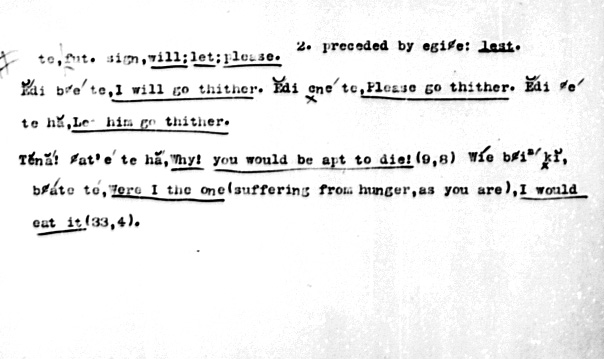
| te |
tʰe |
|
Will; let; please. 2. Preceded by egic̸e: lest. |
6/14/10 |
12/22/10, 5:33 PM |
Jacob Hilton |
http://omahalanguage.unl.edu/dictionary_images/te/opd.03.050.09c.jpg |
View |
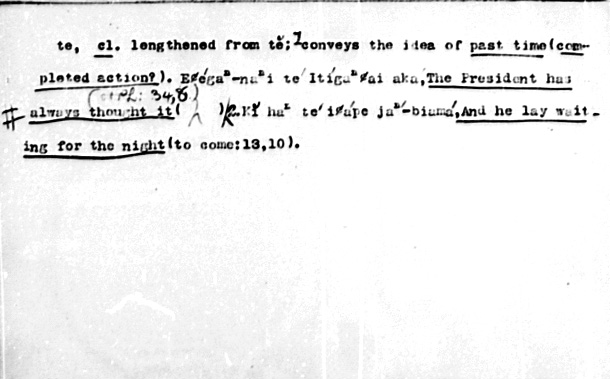
| te |
tʰe |
|
Lengthened from tĕ: conveys the idea of past time (completed action?). |
6/14/10 |
12/22/10, 5:33 PM |
Jacob Hilton |
http://omahalanguage.unl.edu/dictionary_images/te/opd.03.050.09d.jpg http://omahalanguage.unl.edu/dictionary_images/te/opd.03.050.10a.jpg |
View |